
Coastal redwood
Sequoia sempervirens
The coastal redwood is one of the most unique plants in California! It is an evergreen tree that can live to be around 2,200 years old or more. These trees can grow to be 379 feet and have a diameter of 26 feet. It best lives in coastal California and Oregon where the winters are cool and the summers are foggy. For their impressive size their cones are quite small.

Coffee fern
Pellaea andromedifolia
Coffee fern is native to California and Baja California, even growing on the Channel Islands. What looks like tiny leaves are actually leaflets that make up a large leaf. The species is recognizable from its oval shaped leaflets. The new leaves start out as green but turn reddish, purplish, or brown as they mature.
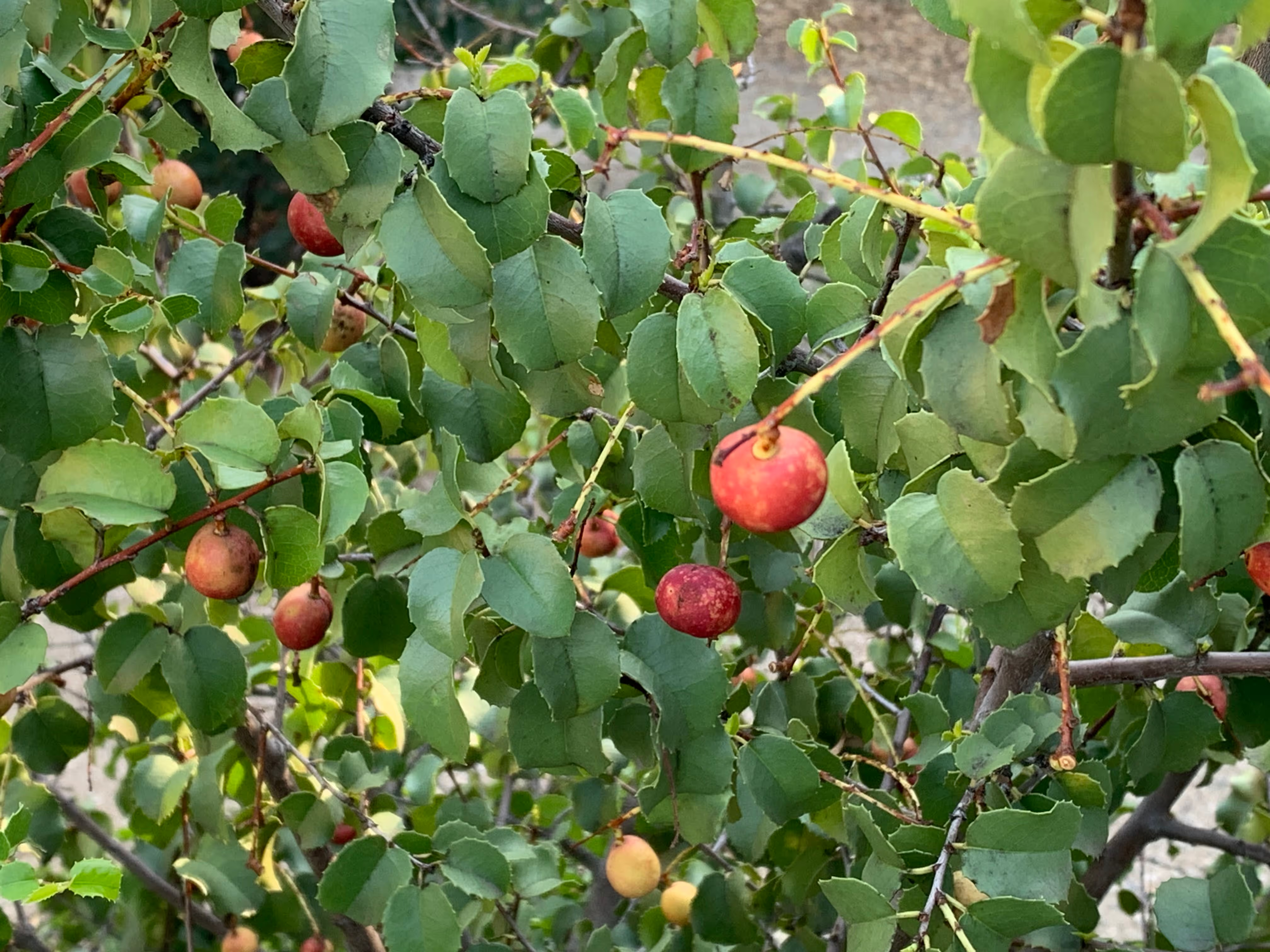
Hollyleaf Cherry
Prunus ilicifolia
This evergreen species in the Rose family is native to coastal California and northern Baja California. It produces red fruits, cherries, in the late summer which birds love. This species has two varieties and the spiky leaves give away that is mainland variety.
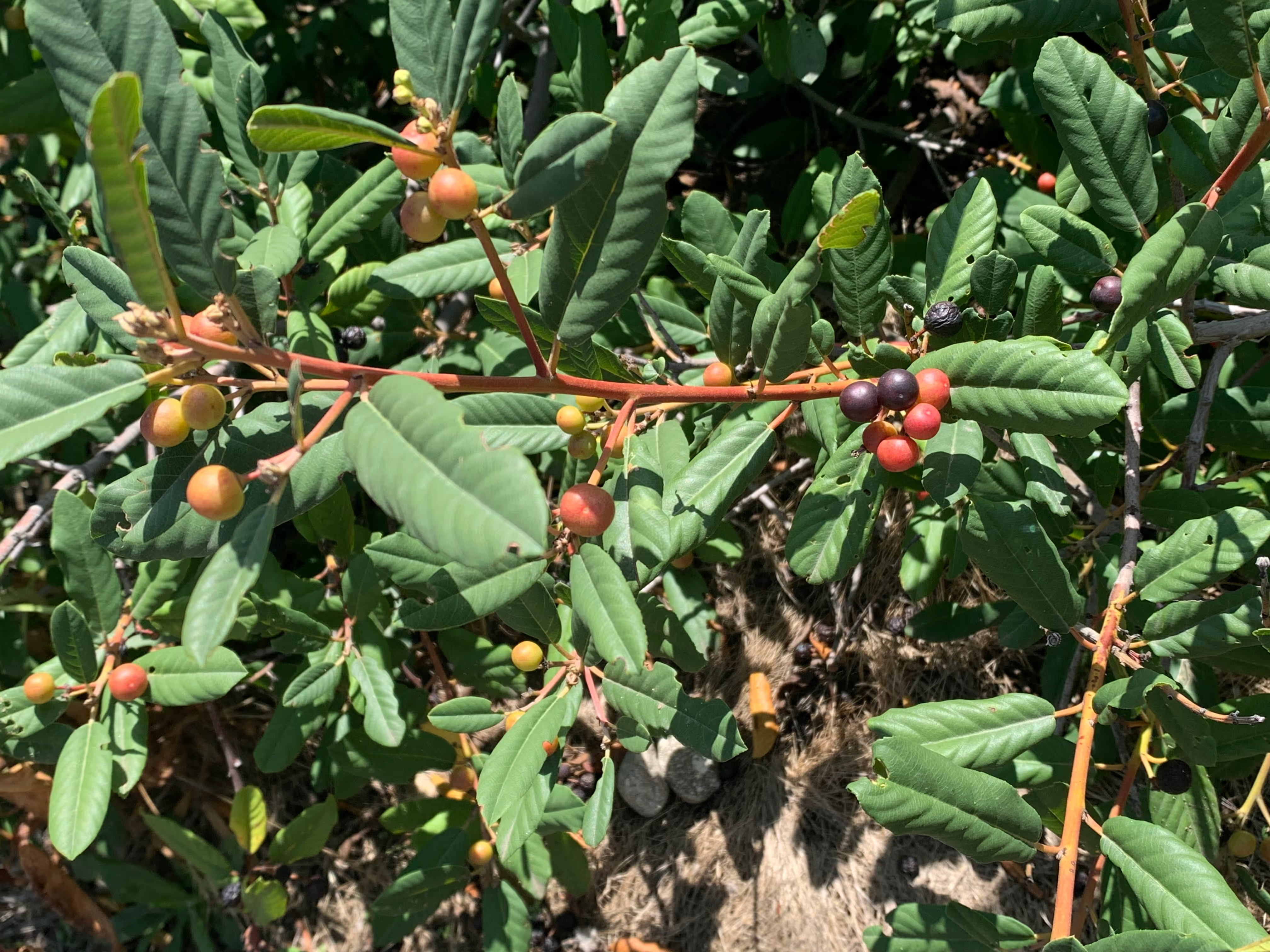
Coffeeberry
Frangula californica
Coffeeberry is an evergreen shrub that naturally grows throughout California and southwest Oregon. The most notable part about the plant is its berries that turn from green to red to black throughout the summer. The seeds of these berries are reminiscent of coffee beans which gives the plant its name. The berry and the bark of the plant have been used by indigenous peoples for medicinal use.

Heartleaf keckiella
Keckiella cordifolia
This creeping plant looks similar to honeysuckle, but is actually in the same family as Penstemons!
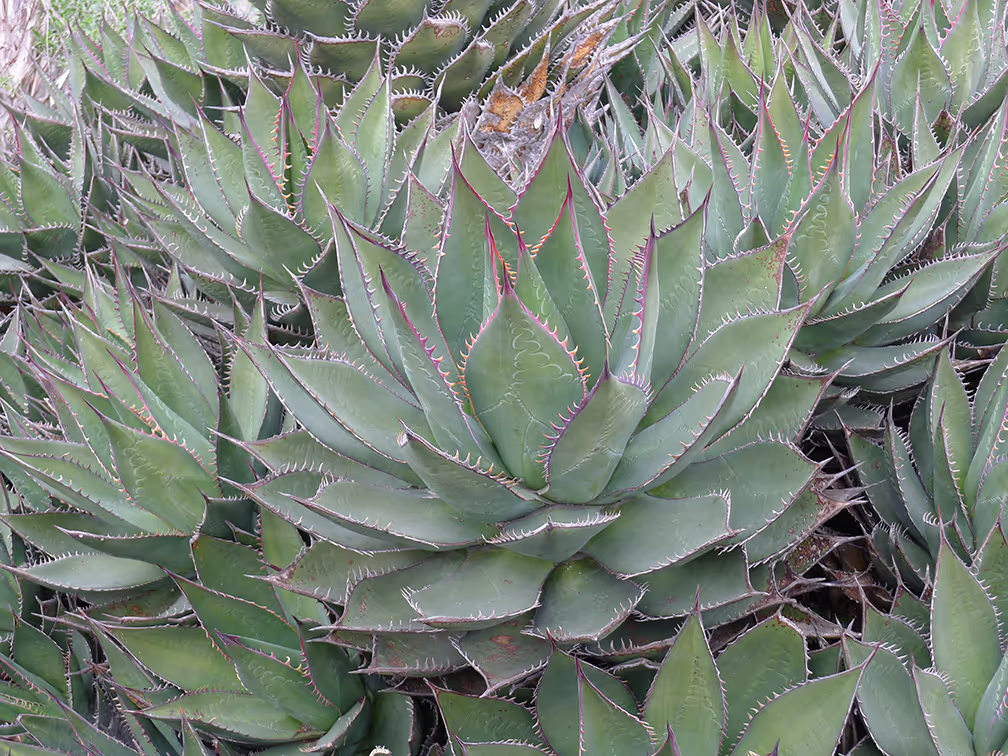
Shaw's agave
Agave shawii
This agave grows in Baja California, Mexico and just across the border in San Diego County, where it's endangered. Today it's threatened by habitat loss in both countries. Our Garden published a Conservation Plan for the species, an important step towards protecting it.
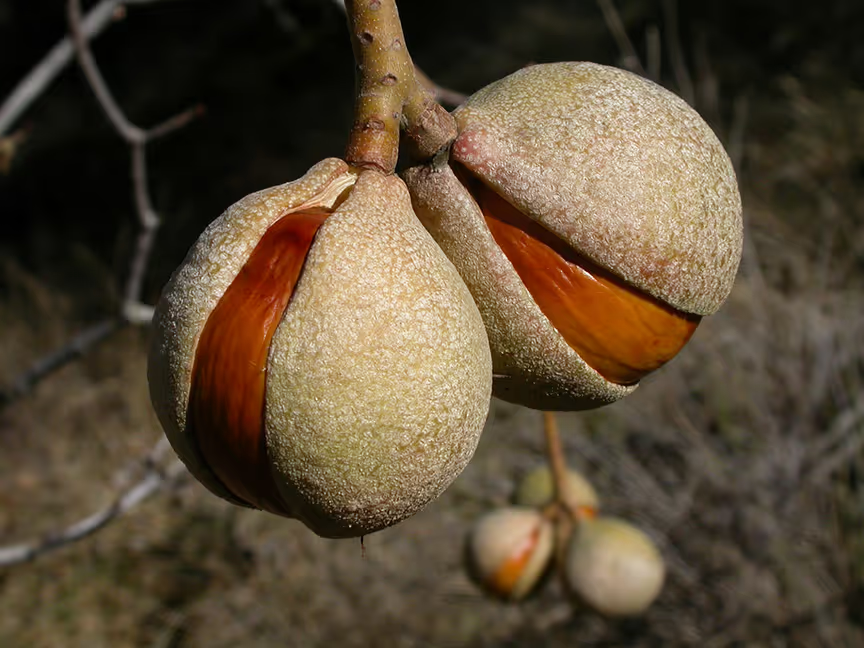
California buckeye
Aesculus californica
What's that tree with no leaves that is covered in big fruits? That's the summer-deciduous California buckeye. While the large nuts of this plant are enjoyed by squirrels at the Garden, they are toxic to people. They have been used medicinally and as food in the past but leaching out the toxins and rendering them safe to consume is a very labor-intensive process.
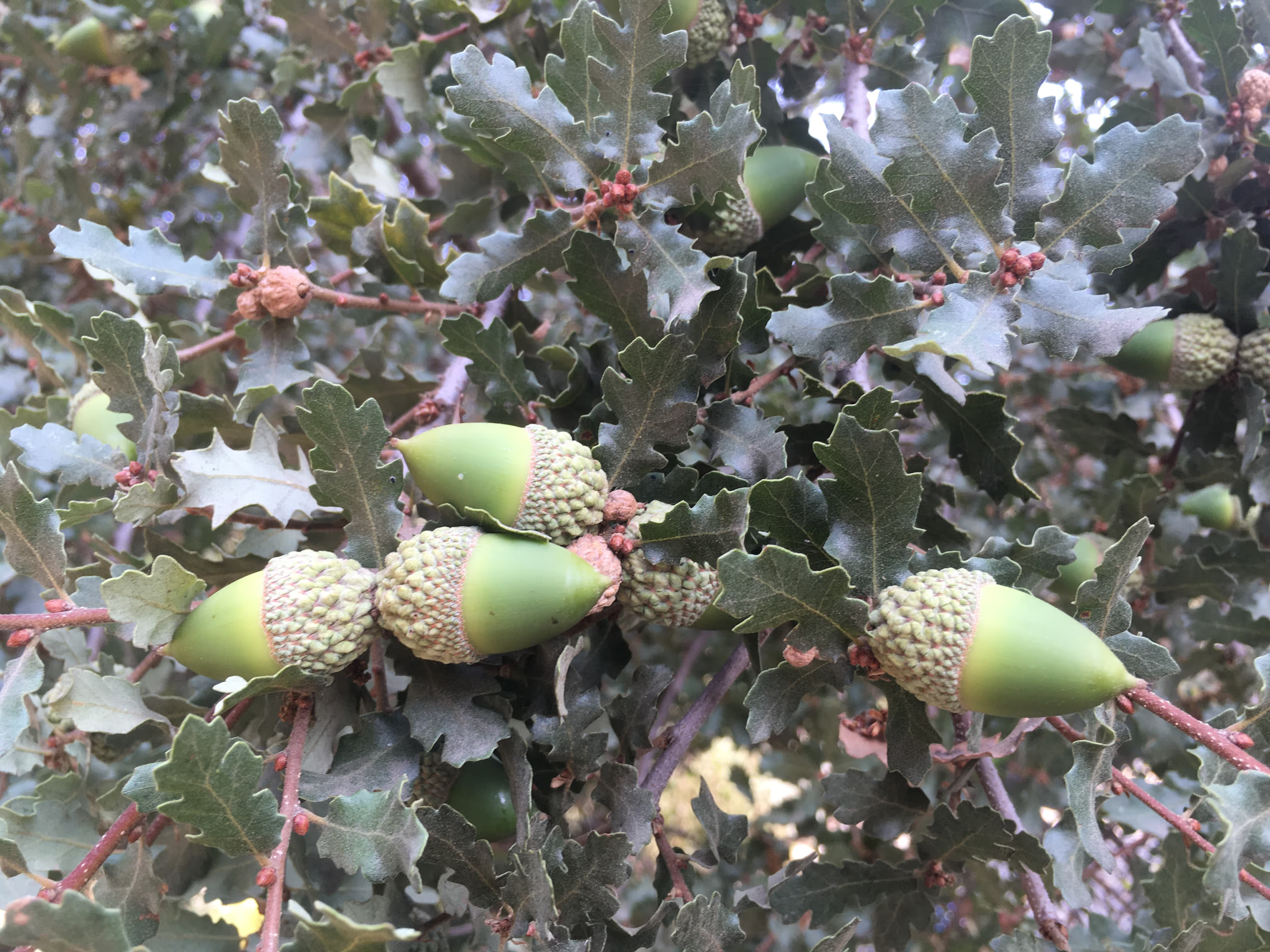
Oak
Quercus spp.
There are 18 species of oaks growing in the garden. The fruit of an oak is called an acorn, which you'll likely see squirrels and maybe woodpeckers collecting and storing. In some years an oak will produce a huge number of acorns relative to other years. This is called masting. Years of very high acorn production overwhelm the animals that would eat them, so many of the acorns the animals store in those years are not eaten and have a chance to grow into new trees and shrubs.
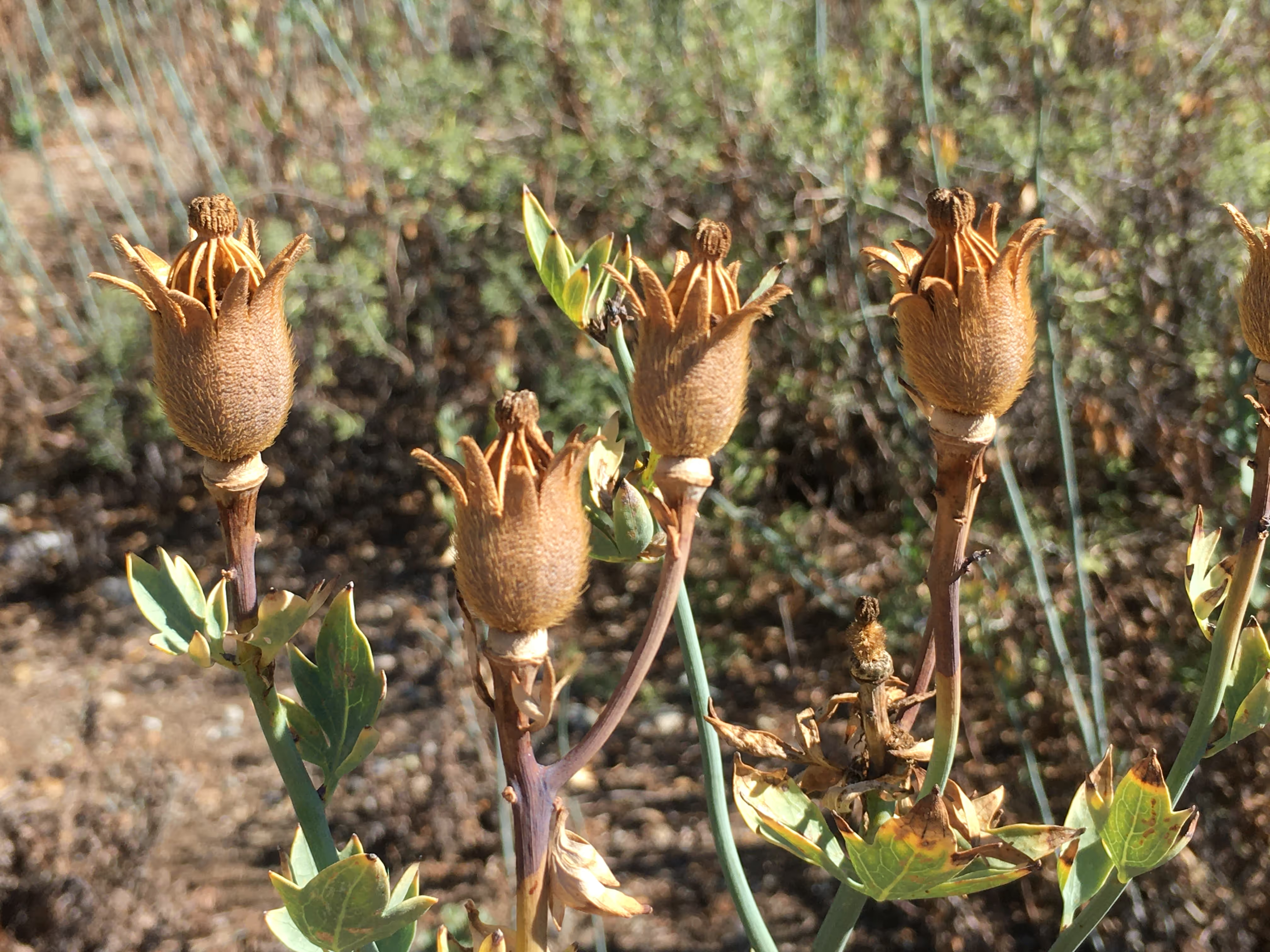
Matilija Poppy
Romneya spp.
The two species of Matilija poppies are generally known for having the largest flowers in California. Their beauty doesn't stop there though. Once done flowering, the fruits dry out and valves open from the top to allow seeds to fall out. These strange fruits are definitely a garden highlight in the fall.
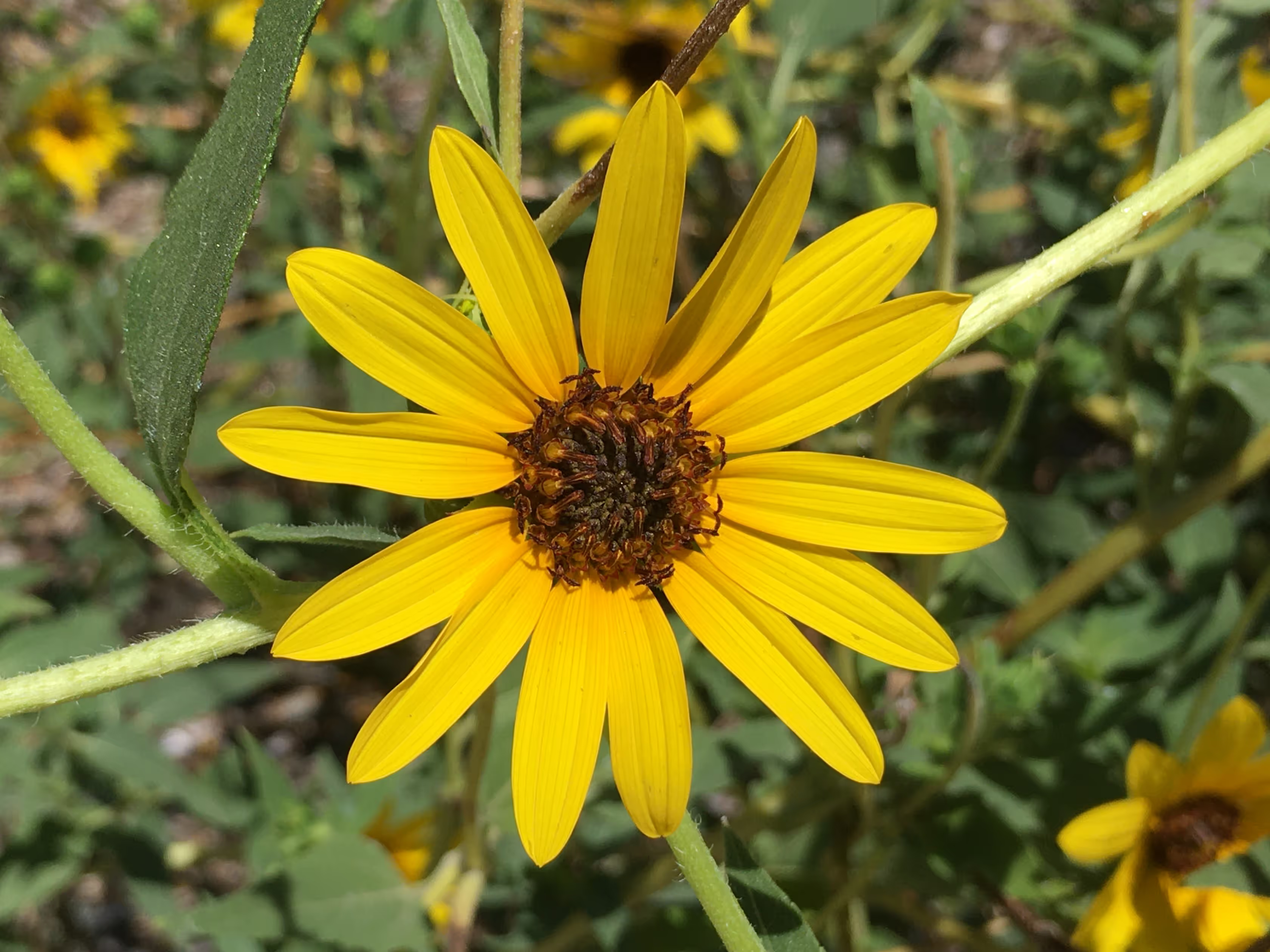
Common sunflower
Helianthus annuus
Common sunflowers are the tall plants with yellow flowers that greet you in the Wildflower Meadow when you first step into the garden. This species is native to much of North America where it has been cultivated by Indigenous Americans for thousands of years. The sunflowers you grow with giant flowers are this same species but selectively bred for bigger flowers and thus the bigger, tasty sunflower seeds you eat.
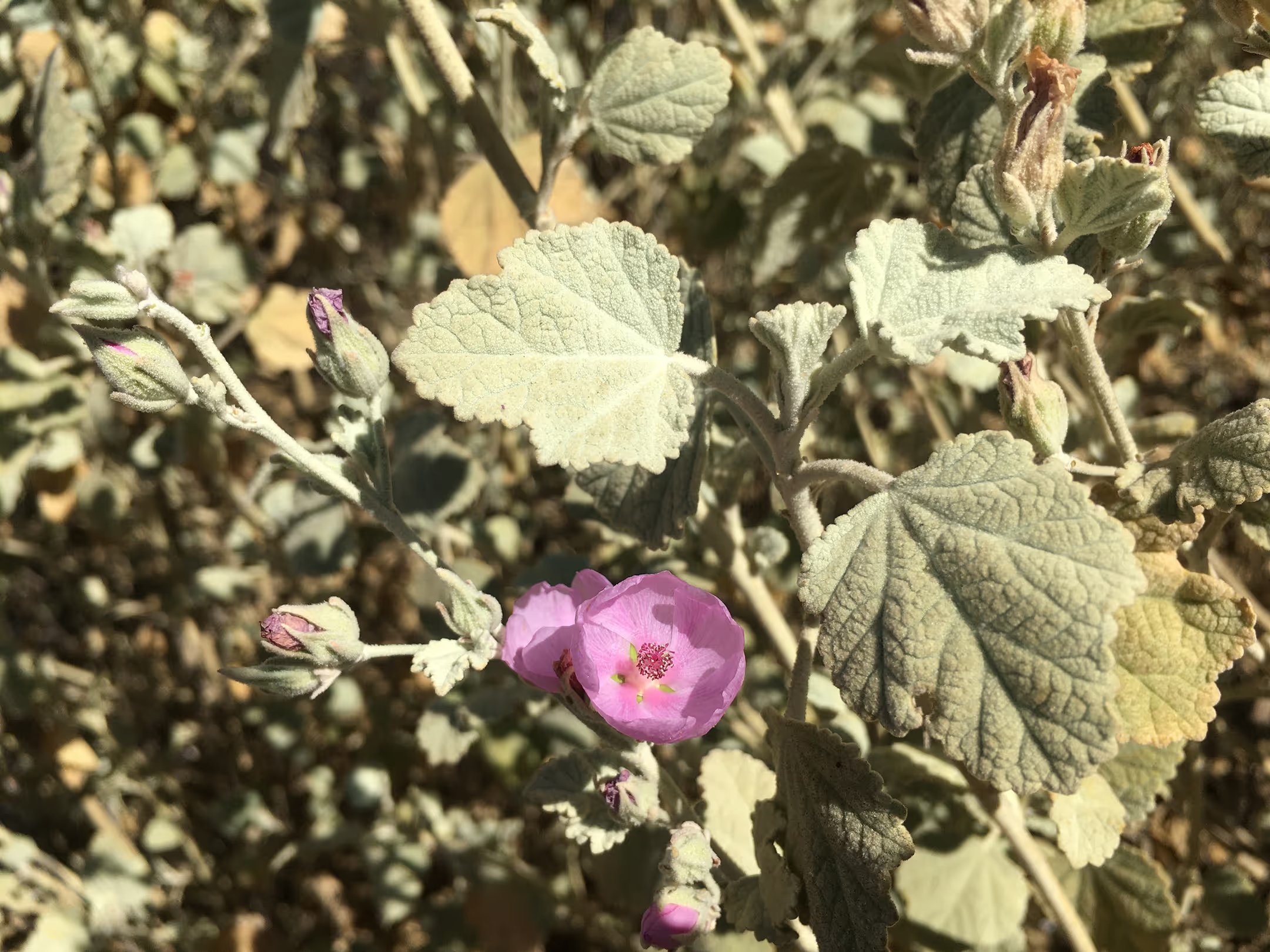
Abbott's bushmallow
Malacothamnus abbottii
Abbott's bushmallow was presumed to be extinct at one point and is now known from just 11 occurrences in Monterey County, all on private property. You can, however, see it here in our conservation groves of this species, which protect the genetic lines in case the wild populations are lost. The best place to see Abbott's bushmallow is on the unpaved loop in the California Habitats section of the garden.

Sticky Monkeyflower
Diplacus aurantiacus
The sticky monkeyflowers are the only shrubby monkeyflowers in California and named for the often sticky leaves. These species have a wide variety of flower colors that are made even wider by cultivated hybrids. The garden has a nice sampling of both native species and cultivars derived from them. The most common color you'll see is orange but you can find flowers that are red or yellow. Try looking for them on the western portion of the loop trail in the CA plant communities garden.

Joshua tree
Yucca brevifolia
The Joshua tree is an iconic member of the southern California flora. If you can't make it out to the desert, our garden is a perfect place to see these majestic plants! There are some particularly interesting examples in the California Habitats section of the garden.

Mexican Blue Fan Palm
Brahea armata
Did you know that the California Floristic Province also includes part of Baja California in Mexico? Visit the Baja California section of the garden to see these beautiful pale blue palms and other species from the southernmost reaches of the California Floristic Province.
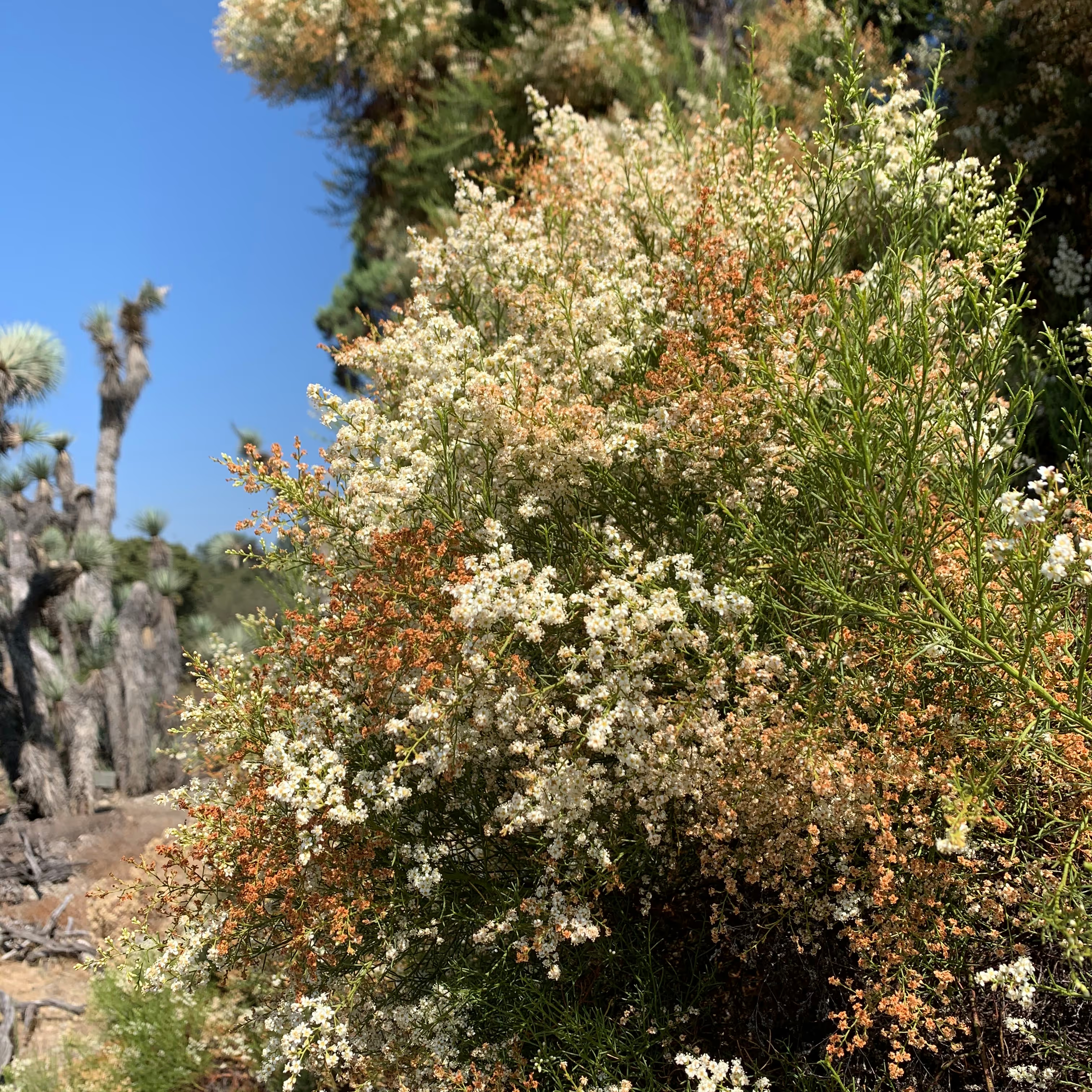
Red Shanks
Adenostoma sparsifolium
A rose is a rose is a …. Red shanks! Found on chaparral slopes in Southern California, this deeply rooted tree is an important slope stabilizer and is indeed a member of the rose family. Plants tend to have a multi-trunk formation with feather-like foliage and small clustering white flowers. Its red peeling bark can have quite the dramatic effect when the sunlight hits it just right. If pruned to tame its growth form, red shanks can be an attractive garden addition that is tolerant of many growing conditions.
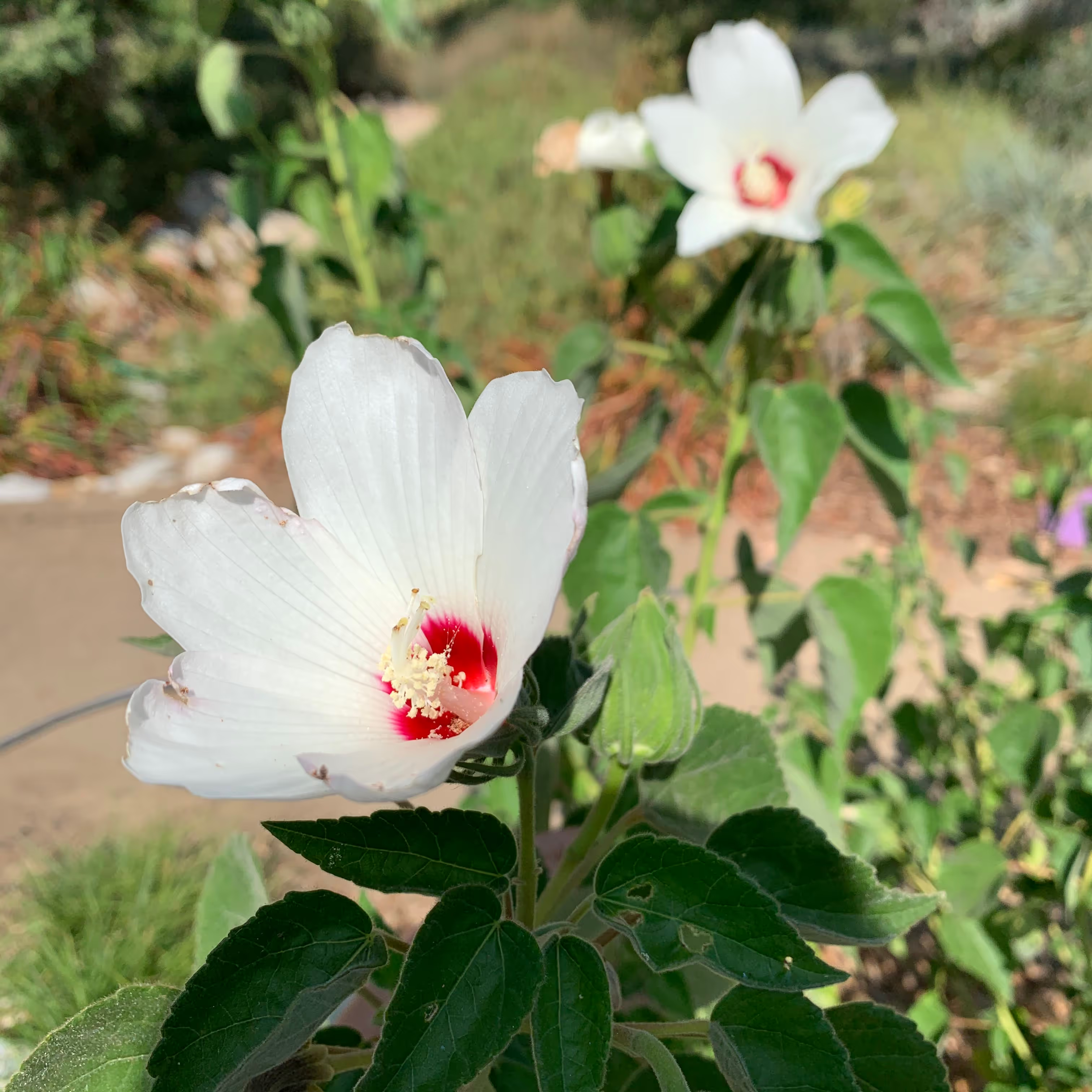
Rose Mallow
Hibiscus lasiocarpos
The large blooms of this shrub are sure to catch your eye with its white to light pink color and crimson center. The plants stand tall and upright, growing about four feet and sporting attractive heart shaped, fuzzy leaves. As this rare native perennial likes to grow in wet soil along streams and ponds, you will be certain to find it near the Reflecting Pond here at the garden. Consider planting this perennial along a sunny border of your native rain garden.
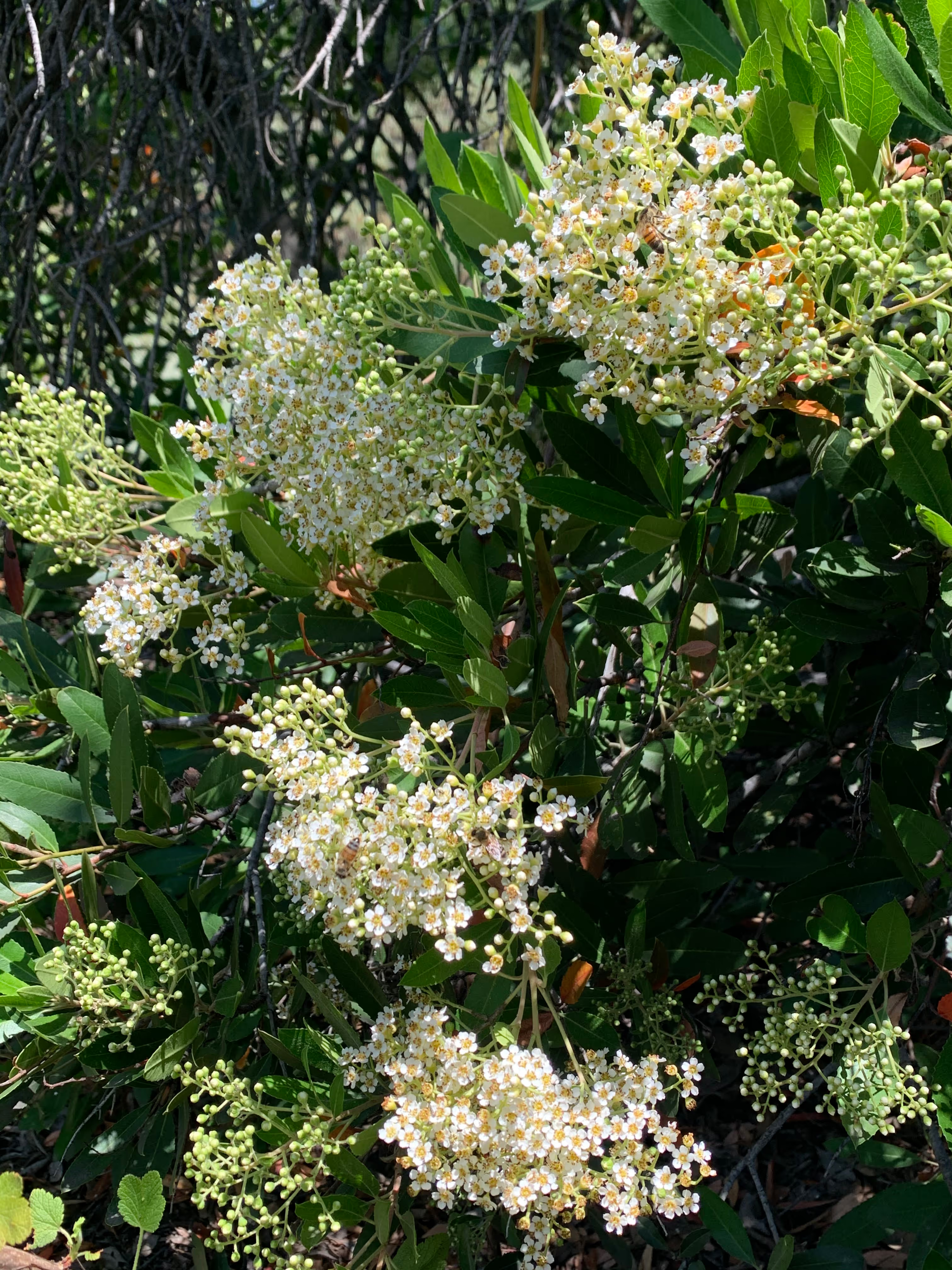
Toyon
Heteromeles arbutifolia
This marvelous large shrub to small tree is a delight all year long! The snowy white dense flower heads bloom in early summer, attracting a variety of insect pollinators. In the fall, plants will begin to show the fruits that these flowers have yielded, fruits that will be red by the winter holiday season. The vibrant red fruit are a favorite of many local bird species. This plant is easy to grow and it holds its vibrant green color all year round even though it needs no supplemental water once established. Watch for the “Davis gold” cultivar of our toyon which has yellow fruits.
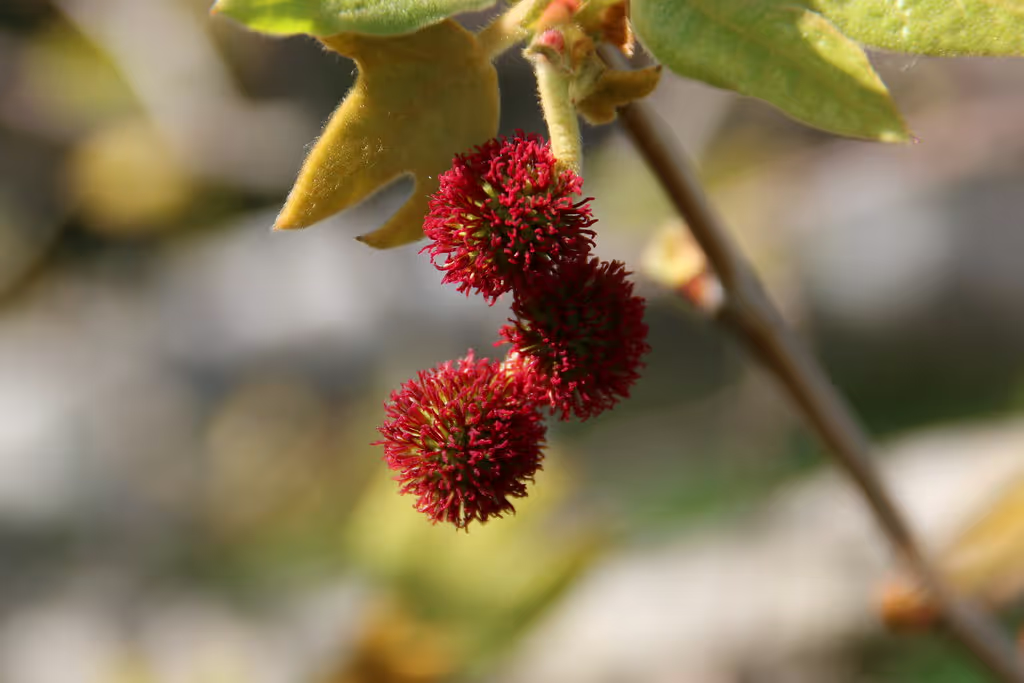
Sycamore
Platanus racemosa
Sycamores lose their leaves during the winter. In the spring, the regrowth of these leaves is accompanied by flowers borne in balls, hanging on stalks from the main stems. Take a close look: while not as showy as some flowers in the garden, they are intriguing!

California Poppy
Eschscholzia californica
Our state flower can, of course, be found throughout the Garden! While showy, the petals close at night or during cloudy days. In areas with cold winters, the plant acts as an annual but acts as a perennial where the winters are mild. Watch out for flashes of bright orange petals and happy pollinators!
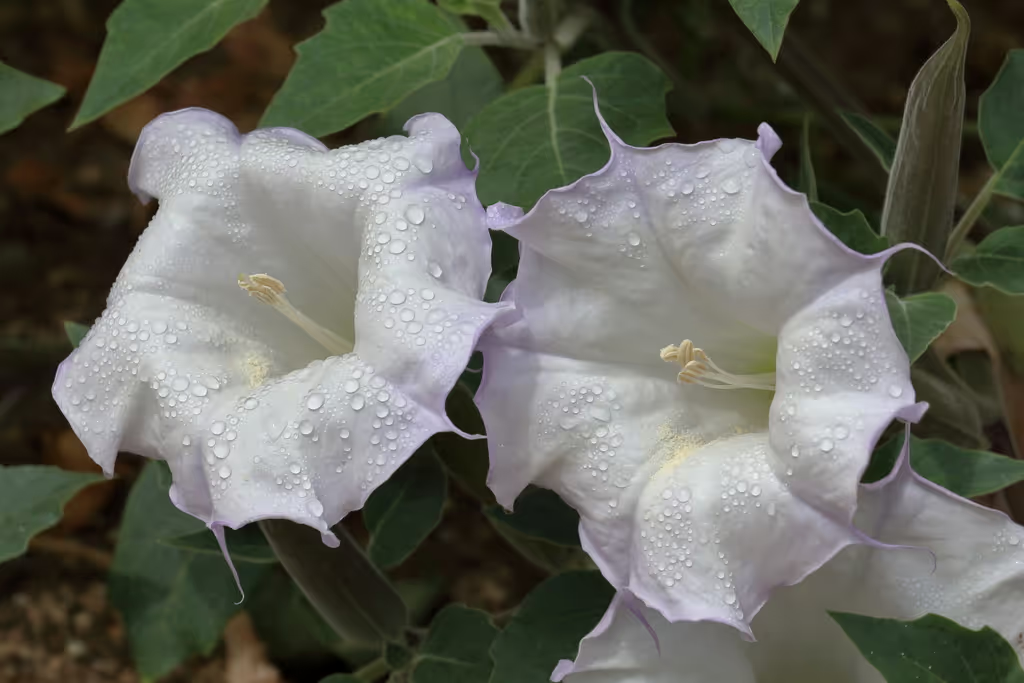
Sacred Datura
Datura wrightii
The enchanting sacred datura is a wildflower with broad, dark-green, wavy leaves and big, white, trumpet-shaped flowers. These flowers have 5 lines that radiate from the center of the flower, can have a slight purple tint, are sweetly fragrant, and are the highlight of the plant. Sacred datura can be found in gravelly open areas or alongside roads throughout the South-western U.S. It is also called sacred thorn-apple since its seeds are in spiky balls. Though this plant is dazzling, it is also dangerous; every part of this plant is quite poisonous. Because of its hallucinogenic properties, this plant is used historically by Native Americans for sacred ceremonies.

Blue Elderberry
Sambucus nigra ssp. caerulea
Bearing beautiful flowers and delicious fruit, blue elderberry is a shrub or tall tree with green leaves with little spikes, small cream or yellow flowers in clusters, and purple edible berries that are available in the Fall. Blue elderberry grows in moist places in a large region: from Oregon to Baja California, and eastward to West Texas. Butterflies and bees love elder flowers, and many different types of birds and other small animals love its fruit. Elderberries could also be eaten and made into drinks and dyes.

Chuparosa
Justicia californica
Also known as beloperone, the vibrant chuperosa is a shrub with green, succulent-like leaves and lots of long, tubular flowers that come in different shades of red or sometimes yellow. Hardy and beautiful, chuparosa grows in hot, dry, and sandy or rocky places in Southern California, Arizona, and North-western Mexico. This plant also attracts a lot of hummingbirds and other birds. In fact, its name “chuparosa” meant “hummingbird” in Spanish!

Santa Cruz Island Buckwheat
Eriogonum arborescens
This extremely drought tolerant and elegant shrub has dark red bark, fuzzy, narrow leaves, and lovely clusters of frilly light pink or white flowers that brown as they age. Santa Cruz Island buckwheat only naturally grows on California’s Channel Islands, but has been planted on mainland California in sunny and well-drained areas. Like all buckwheat, Santa Cruz Island buckwheat is fire resistant. It also blooms almost year round and attracts lots of birds and butterflies.

Island Buckwheat
Eriogonum grande var. grande
Similar to the widespread naked buckwheat (Eriogonum nudum), island buckwheat had long "naked" stems with most of its leaves at the base of the plant. Island buckwheat is native to the Channel Islands but is widely cultivated.

Island bush snapdragon
Gambelia speciosa
Vibrant and beautiful, the island snapdragon is a shrub with bright red, tubular flowers that grow in clusters and smooth, lime-green leaves. It prefers coastal areas, but is a drought-tolerant plant that can grow in well-drained and rocky areas. Hummingbirds love its lovely flowers, and island snapdragon is fire resistant. It is also an endangered species and only grows naturally on the islands off the coast of Southern California and Baja California.

Bladderpod
Peritoma arborea, Isomeris arborea
Bladderpod is a shrub with many branches, blue-green, circular leaves, and beautiful bright yellow flowers that grow in clusters. It tends to bloom year round and can be found from the coast to the deserts in Southern and Baja California. Named after its puffed up, edible seed pods, this hardy plant attracts hummingbirds, butterflies, and bees. It also gives off an interesting fragrance that is a source of debate: some think the smell is pleasant while others think the complete opposite. Visit the bladderpod today and discover what you think of it!

Western Columbine
Aquilegia formosa
Elegant with its bright red and yellow flowers, the Western Columbine is a beautiful addition to gardens. It is called by its scientific name Aquilegia formosa, which means “beautiful eagle,” since the flower’s shape resembles eagle talons, and this flower grows in moist, cool areas all across Western North America. Western Columbine is attractive to hummingbirds and has been eaten as a candy, used on bee stings, worn as a perfume, and more by Native American tribes.
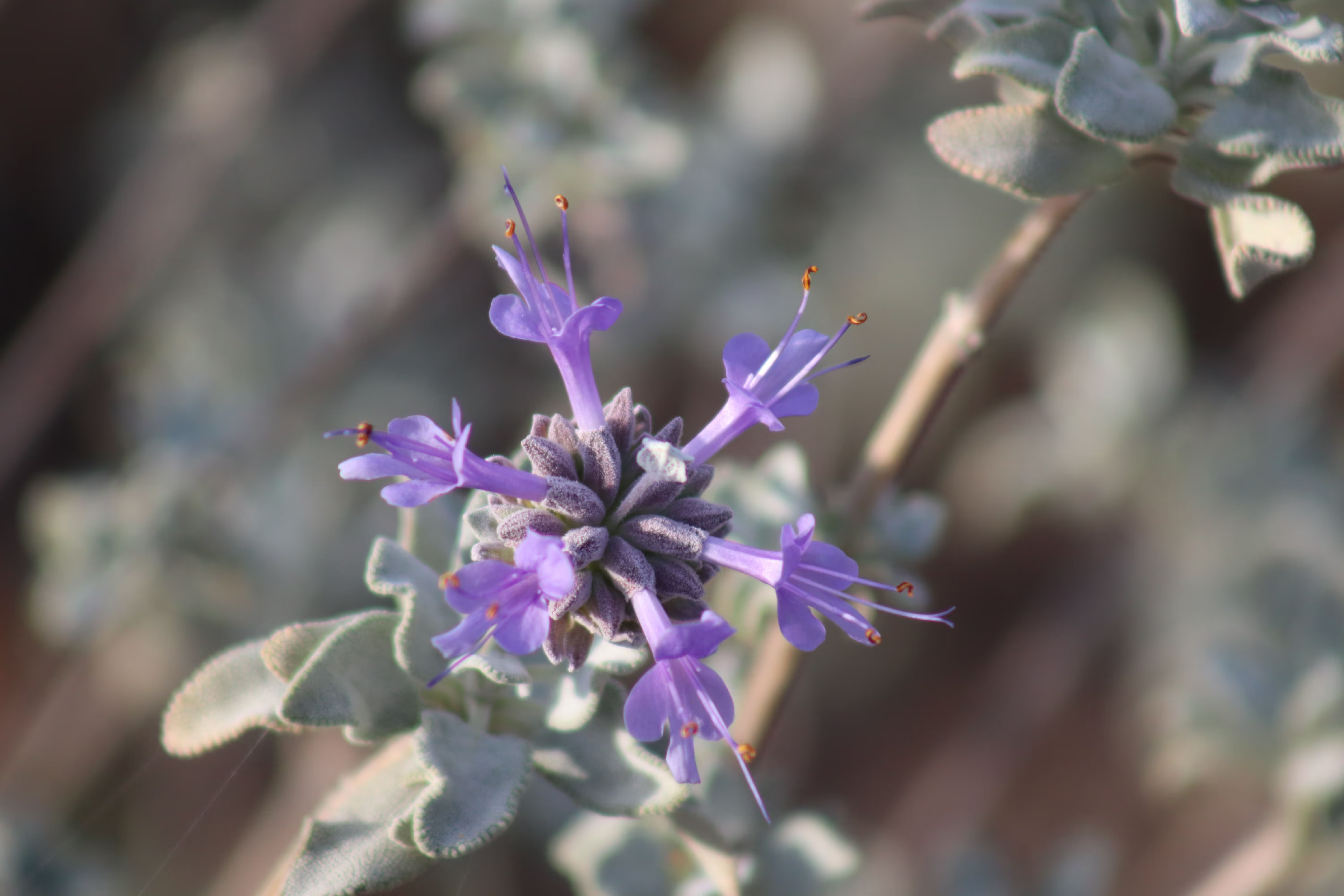
Cleveland Sage
Salvia clevelandii
Cleveland sage, also known as blue sage, is a fragrant shrub with wrinkly, fuzzy green leaves and rich purple or blue, trumpet-shaped flowers that grow in raised clusters. This drought-tolerant plant grows in well drained, sunny areas in Southern California and Baja California. Cleveland sage’s lovely, strong fragrance and beautiful flowers attract a lot of hummingbirds and bees. It has also been eaten, used for ceremonies, and used to cure poison oak by Native Americans in California.
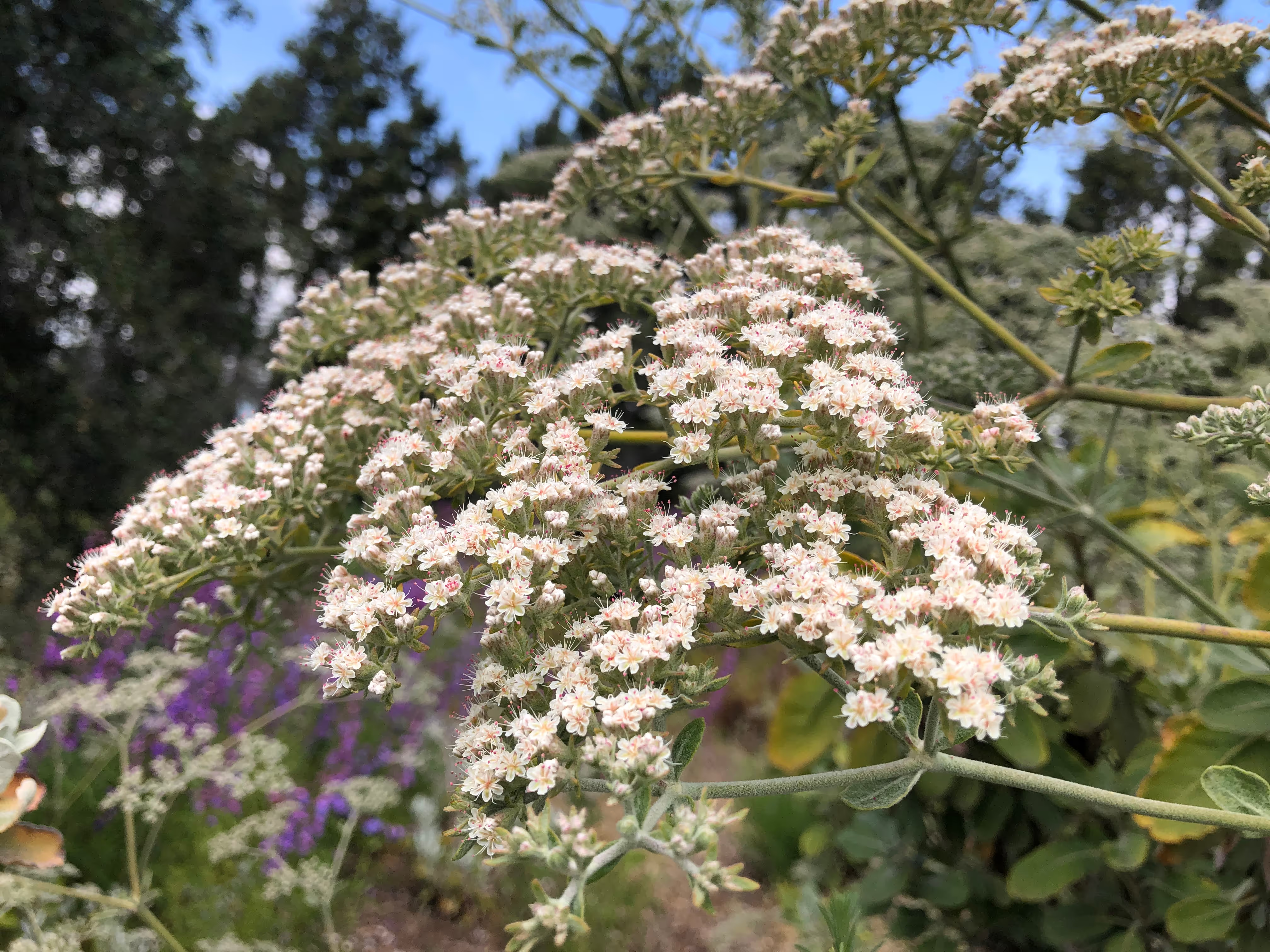
St. Catherine's Lace Buckwheat
Eriogonum giganteum
This elegant plant has “carpets” of tiny pink-white flowers that grow above its white-green leaves. It only naturally grows on California’s Channel Islands, in the fast-draining, moist, and rocky coastal scrub. St. Catherine’s Lace buckwheat is a very important food source for butterflies such as the Gray Hairstreak and for birds. In late summer and early fall its pinkish-white flowers get a new dark-orange color. This buckwheat has also traditionally been used by Native Americans to alleviate head and stomach aches.
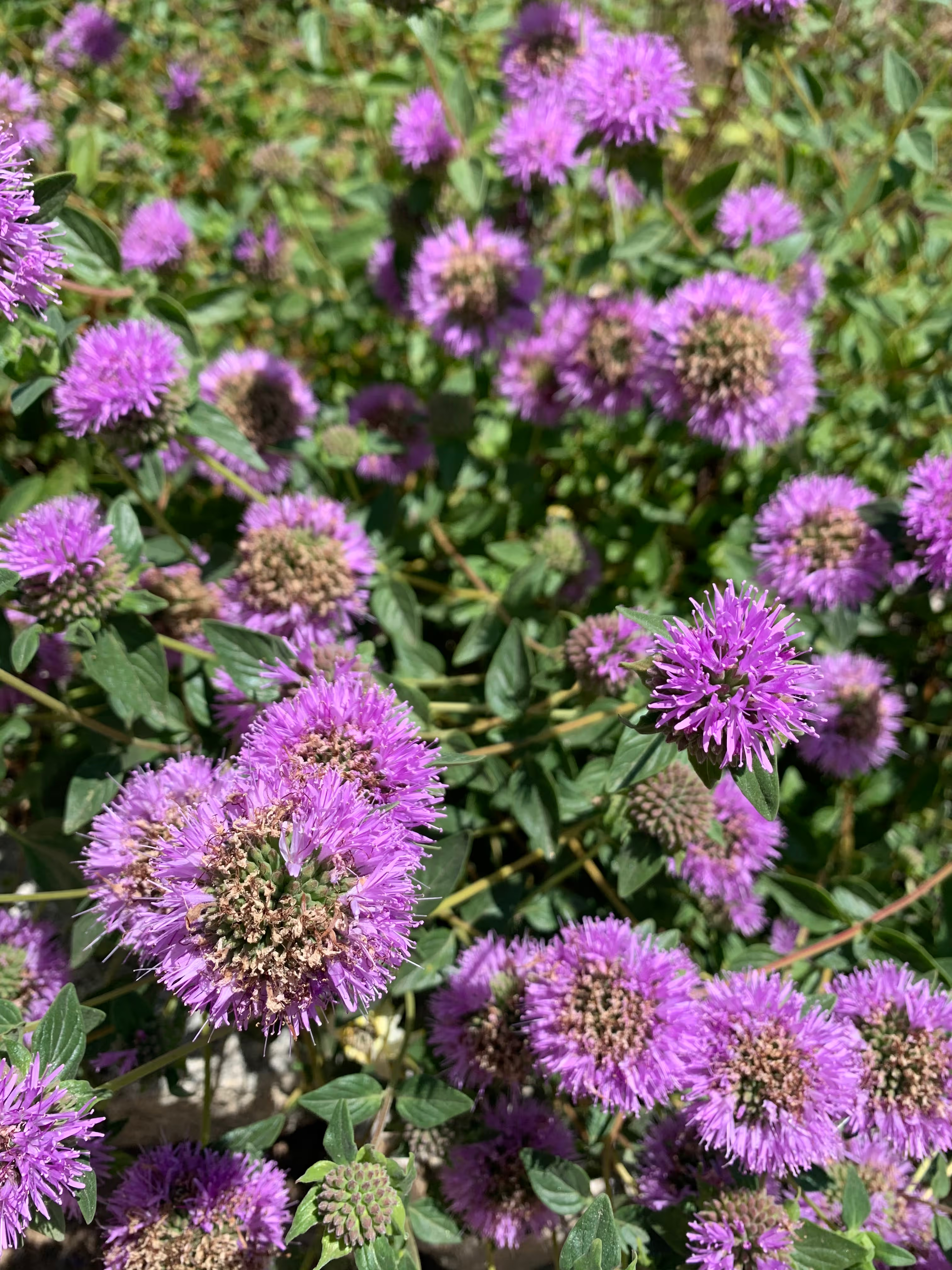
Coyote Mint
Monardella villosa
A member of the mint family, coyote mint is a wildflower the size of a small shrub and has bright pink or purple flowers in round clusters and fragrant, crinkled leaves. They only naturally grow in California, in coastal, woodland, or rocky areas where they can get plenty of sun and enough shade and water. Coyote mint flowers and their fragrance attracts a lot of bees and a range of butterflies, including Mourning Cloak butterflies. Coyote mint can also be made into a strong mint tea and has been used by Native Americans to relieve sore throats, stomach aches, and respiratory issues.
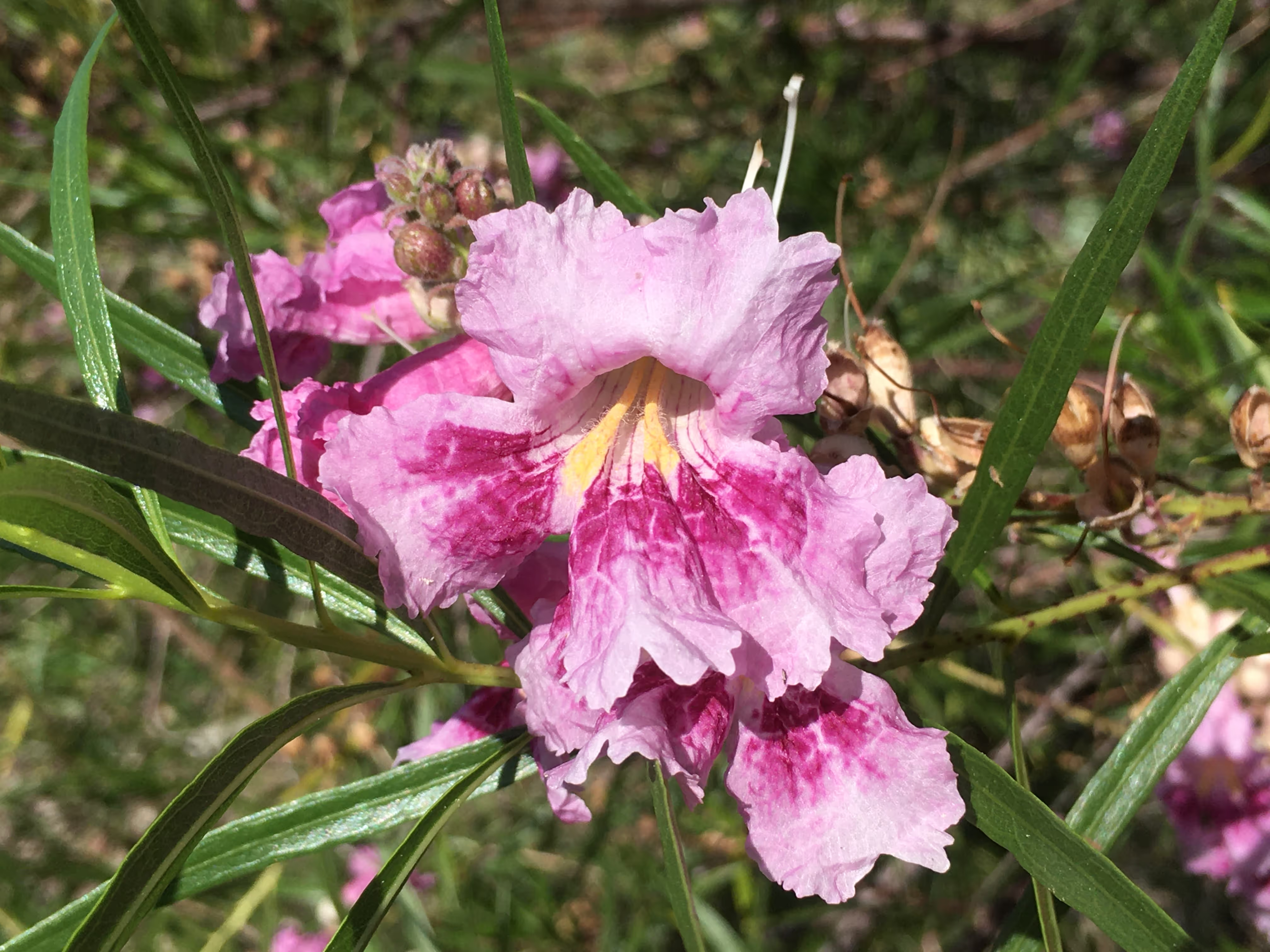
Desert Willow
Chilopsis linearis
Known for its durability and beautiful fragrant flowers, the Desert Willow is a tall shrub with long,green narrow leaves and pink or purple trumpet-like flowers. It grows in sandy areas and dry grasslands throughout the southwestern U.S. and Mexico. Desert willow is used in landscape design because of its beautiful flowers and nice form.
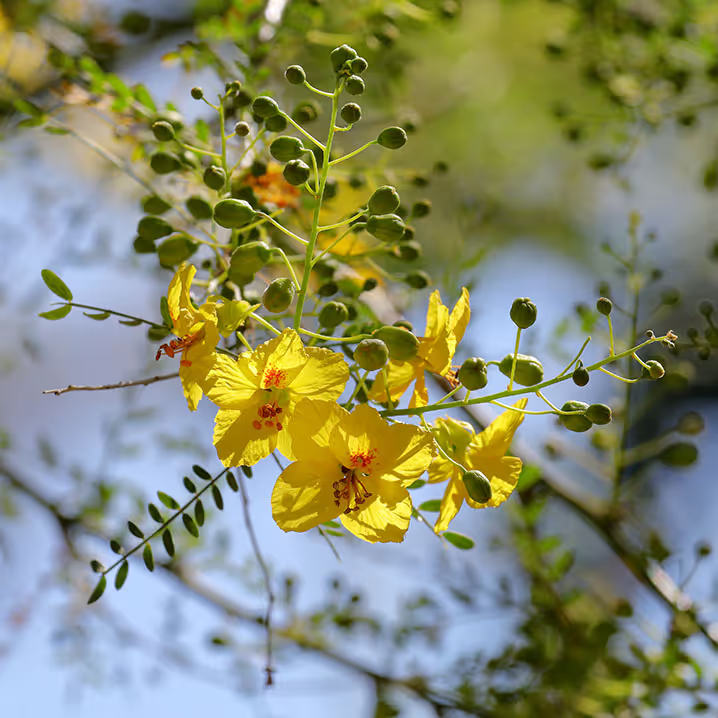
Palo Verde
Parkinsonia florida
These trees are famous for their beautiful, bright yellow flowers and smooth green trunks. It is a desert plant that grows in Southern California, Southern Arizona, and Northwestern Mexico, and whose flowers provide the much-needed shade, nectar, and seeds for bees, hummingbirds, and other wildlife. Did you know that Palo Verde trees drop edible seeds and flowers?

California Buckwheat
Eriogonum fasciculatum
This drought-tolerant and lovely shrub has small, fuzzy leaves and white, small flowers that grow in dense clusters on the bush. It can be found growing all over sandy areas, such as canyons and dried riverbeds, throughout Central and Southern California. California buckwheat’s beautiful flowers change color from white to pink to burnt orange as the plant dries and the season progresses, and has been used by Native American communities as a medicine to alleviate head and stomach aches, promote heart health, and aid in digestion.


